
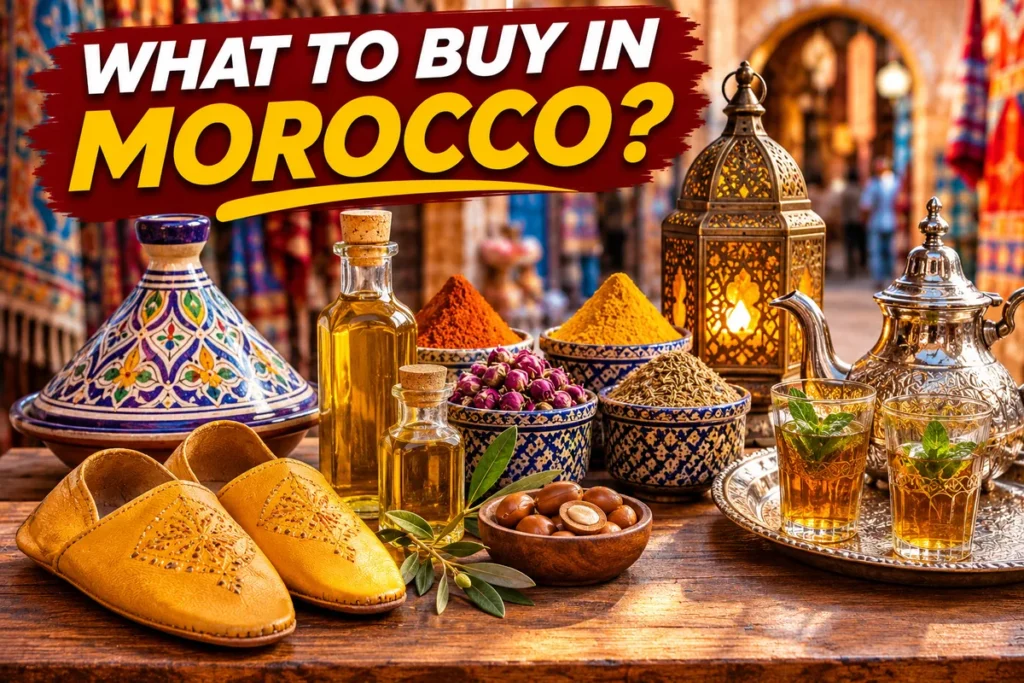
What to buy in Morocco? Moroccan souks are a paradise for shopping, full of handmade crafts, colourful textiles, spices, leather, ceramics and natural beauty products. But with so much choice, and with bargaining as part of the culture, it is easy to feel lost or to pay too much. In this guide, we share the best souvenirs to buy in Morocco, how to recognise quality, where to shop in the main cities, how to bargain respectfully, and what you can take home in your luggage. It is written by our local team, who shop in these markets every week.
The best things to buy in Morocco: our top list
- Argan oil (cosmetic and culinary)
- Spices, including ras el hanout, saffron and cumin
- Moroccan rugs and kilims
- Leather goods: babouches, bags, poufs and jackets
- Ceramics and tagines
- Moroccan lamps and lanterns
- Textiles: scarves, blankets and djellabas
- Beauty products: black soap, ghassoul clay, rose water and kessa gloves
- Moroccan tea, teapots and tea glasses
- Silver jewellery and Amazigh (Berber) crafts
- Thuya wood boxes from Essaouira
- Dates, dried fruits and almonds
Argan oil: the essential souvenir
Argan oil comes from the argan tree, which grows mainly in south-western Morocco, around Agadir, Essaouira and the Souss region. There are two types:
- Cosmetic argan oil is made from raw kernels. It is light, with a very mild smell, and used for skin, hair and nails.
- Culinary argan oil is made from roasted kernels. It has a nutty taste and is used for salads, couscous and amlou, a delicious spread of argan oil, almonds and honey.
How to recognise good argan oil: buy from women’s cooperatives or reputable shops, check the label for “100% pure argan oil”, and be wary of very low prices. Pure argan oil is relatively expensive because its production is long and largely done by hand. Cosmetic oil should smell faint, not strong or rancid. Many tours in the region stop at a cooperative where you can see how it is made. Read our article about the famous tree-climbing goats of Morocco, which you often see in argan trees.
Spices
The spice stalls in Moroccan souks, with their colourful pyramids, are among the most photographed sights in the country. Popular choices include:
- Ras el hanout: a complex blend that can contain many spices, used in tagines and couscous.
- Cumin, paprika, ginger, turmeric and cinnamon: the basics of Moroccan cooking.
- Saffron: Morocco produces saffron, notably around Taliouine. Real saffron is expensive; very cheap “saffron” is often fake or safflower.
- Dried mint and verbena for tea.
Tip: buy whole spices or small quantities in sealed bags, and choose busy stalls with good turnover for fresher products. A great way to learn how to use them is a Moroccan cooking class (from €30), where you also discover local spices.
Moroccan rugs and carpets
Moroccan rugs are famous worldwide. The main styles include:
- Beni Ourain: thick, soft, cream-coloured wool with dark geometric lines, from the Middle Atlas.
- Azilal: colourful, artistic designs on a light background.
- Boucherouite: recycled-fabric rugs in bright colours, affordable and fun.
- Kilims (hanbel): flat-woven rugs, lighter and easier to transport.
Buying tips: check the back of the rug to see the knots (hand-knotted rugs show irregular knots), ask about the materials (wool, cotton or synthetic), take your time, and never feel pressured by tea and long presentations. Many shops can ship rugs abroad, but compare shipping costs and make sure you get a written receipt. Rugs are an investment, so bargaining is expected.
Leather goods
Morocco is known for its leather, especially in Fes and Marrakech. Popular items include babouches (traditional slippers), bags, wallets, belts, poufs and jackets. Real leather has a natural smell and texture, and small irregularities. Test the stitching and the zips. Poufs are often sold empty, which makes them easy to pack; you fill them at home. Read Fes or Marrakech to learn about the famous tanneries.
Ceramics and tagines
Moroccan ceramics are beautiful and varied: the blue and white pottery of Fes, the painted plates of Safi, and decorative and cooking tagines. Important: decorative tagines are not for cooking. If you want to cook with one, buy an unglazed or food-safe cooking tagine, and ask the seller. Wrap ceramics well in clothes in your suitcase, or ask the shop to pack them carefully.
Lamps and lanterns
Metal lanterns with cut-out patterns create beautiful light effects and are among the most iconic Moroccan decorations. You will find brass, copper, iron and coloured glass lamps in every souk. Smaller lanterns are easier to pack. Check whether the lamp is wired for electricity and compatible with your country’s sockets.
Textiles and clothing
- Scarves and shawls: cotton, silk-like cactus fibre (“sabra”) or wool. Practical and light.
- Djellabas and kaftans: traditional robes, from simple to very elaborate.
- Pompom blankets and throws: very popular for home decoration.
- Hammam towels (fouta): light and quick-drying, perfect for the beach.
Note on “sabra” (cactus silk): many products sold as cactus silk are actually viscose or other fibres. That is not a problem if the price reflects it.
Beauty products and hammam essentials
Moroccan beauty products make light, affordable and useful gifts:
- Black soap (savon beldi): a soft olive-based soap used in the hammam.
- Kessa glove: the scrubbing glove used for exfoliation.
- Ghassoul (rhassoul) clay: a natural clay for hair and skin from the Atlas.
- Rose water: from the Dades Valley, known as the “Valley of Roses”.
- Prickly pear seed oil: a precious, expensive oil used in skincare.
Want to try them before buying? Book a traditional hammam and massage in Agadir (€39) and read our hammam guide.
Tea sets
Mint tea is the symbol of Moroccan hospitality. A silver-coloured teapot, a set of decorated glasses and a tray make a beautiful souvenir. Most teapots are made of nickel silver or other alloys rather than solid silver; that is normal at tourist prices. Add some Chinese gunpowder green tea and dried mint, and you can recreate the ritual at home.
Finding our local guides useful? Add YouTours as a preferred source on Google.
Jewellery and Amazigh crafts
Amazigh (Berber) silver jewellery, with its bold shapes, coral, amber and enamel, is famous, especially around Tiznit, south of Agadir. Be aware that “silver” can mean various alloys; serious shops can tell you the silver content. The Legzira and Tiznit day trip (from €49) lets you visit Tiznit and its jewellery souk.
Thuya wood from Essaouira
Essaouira is known for its craftsmen who work thuya wood, a fragrant wood used for boxes, chess sets, jewellery boxes and inlaid objects. You can visit workshops along the ramparts. Join our Essaouira day trip from Agadir (from €39) to discover them.
Food souvenirs
- Dates: many varieties; Medjool is the most famous.
- Amlou: the almond, argan oil and honey spread.
- Olives and preserved lemons: check your country’s rules on bringing food.
- Moroccan pastries: cornes de gazelle and chebakia make great gifts if eaten quickly.
- Honey: the Souss region is known for honey, including thyme and euphorbia varieties.
Where to shop in Morocco
Marrakech
The souks of the Marrakech medina are vast and offer almost everything, organised in sections (spices, leather, lamps, carpets). Prices are often higher at first, so bargaining matters. Read things to do in Marrakech.
Fes
The best place for authentic leather, ceramics, brass and woodwork, often bought close to the workshops.
Agadir
Souk El Had is one of the largest markets in Morocco, with thousands of stalls selling fruit, vegetables, spices, argan oil, crafts, clothes and household goods. It is more local and less touristy than the medinas of Marrakech and Fes, and prices can be fairer. Read our complete guide to Souk El Had in Agadir, or visit it with a guide on our Agadir city tour (from €15).
Essaouira and Taroudant
Essaouira’s medina is relaxed, with less pressure, and is ideal for thuya wood, art and textiles. Taroudant, nicknamed “little Marrakech”, has authentic, calm souks; visit it on our Taroudant day trip (from €45).
Cooperatives and fixed-price shops
Women’s cooperatives (especially for argan oil) and government craft centres (Ensemble Artisanal in many cities) offer fixed prices, which is useful to get an idea of fair prices before bargaining in the souks.
How to bargain in Morocco
Bargaining is a normal part of shopping in the souks, and it should be friendly and respectful. Some tips:
- Know what you want to pay before asking the price, ideally after checking fixed-price shops.
- Let the seller give the first price, then make a counter-offer well below it.
- Stay relaxed and smile. Bargaining is a conversation, not a fight.
- Do not start bargaining if you do not intend to buy. Agreeing on a price and then walking away is considered rude.
- Be ready to walk away politely. Sometimes the best price comes when you leave.
- Buy several items in the same shop for a better overall price.
- Remember the human side: a few dirhams matter more to the artisan than to you. Aim for a fair price, not the lowest possible.
Learn about the local currency in our guide to money in Morocco.
Shopping traps to avoid
- Guides who take you to “their cousin’s shop”: they earn a commission, which raises prices.
- “Last day of the cooperative” or “special Berber market today”: classic sales stories.
- Fake saffron and diluted argan oil: buy from reputable places.
- Paying by card with surcharges: ask beforehand; cash is often better for small purchases.
- Shipping promises without receipts: always get written details.
More tips in Morocco travel tips for first-timers.
What can you take home?
Customs rules depend on your destination country, so check before you travel. In general:
- Liquids like argan oil and rose water in your cabin bag must follow airline liquid limits; pack large bottles in checked luggage, well sealed.
- Many countries restrict meat, dairy and some plant products.
- Large items like rugs or lamps can be shipped, but compare costs and check import duties.
- Do not buy products made from protected animals or plants, or fossils without proper documentation.
Packing your souvenirs
Wrap ceramics and glass in clothes, put liquids in sealed plastic bags, buy empty poufs and keep a light bag free in your suitcase for shopping. A foldable bag is very useful for market days.
Souvenir ideas by budget and by person
Small and affordable gifts
- Small bags of spices or a ras el hanout blend
- Black soap and a kessa glove
- A pair of babouches
- Small ceramic bowls or spoons
- Tea glasses or a packet of mint tea
- Small thuya wood boxes
Mid-range souvenirs
- A bottle of pure argan oil from a cooperative
- A leather bag or an empty pouf
- A teapot with a tray
- A pompom blanket or a set of hammam towels
- A small brass or copper lantern
Special purchases
- A hand-knotted rug
- Amazigh silver jewellery
- A large lamp or a set of decorated ceramics
- A tailored leather jacket or a kaftan
For food lovers
Spices, saffron, culinary argan oil, amlou, honey and a cooking tagine, ideally after learning a few recipes in a cooking class.
For home decoration lovers
Lanterns, rugs, poufs, ceramics, baskets and woven textiles bring the warmth of a riad into your home.
Supporting local artisans
Buying handmade products helps keep traditional crafts alive. Whenever possible, buy directly from artisans in their workshops, from cooperatives that support women in rural areas, or from shops that clearly indicate the origin of their products. Ask questions: most artisans are proud to explain how they work, and it makes your souvenir even more meaningful.
FAQ: what to buy in Morocco
What is the best souvenir from Morocco?
Argan oil is the most iconic souvenir, followed by spices, leather goods, ceramics, rugs and lanterns.
Is it cheaper to buy argan oil in Agadir?
The Agadir region is where argan trees grow, and buying from local cooperatives is a good way to get authentic oil at a fair price.
Do I have to bargain everywhere in Morocco?
No. Bargaining is common in the souks, but supermarkets, cooperatives, fixed-price shops and restaurants have fixed prices.
How much should I offer when bargaining?
There is no fixed rule. Know what you are willing to pay, compare prices in fixed-price shops, and aim for a fair price for both sides.
Can I pay by card in the souks?
Most small stalls only accept cash. Larger shops may accept cards, sometimes with a surcharge.