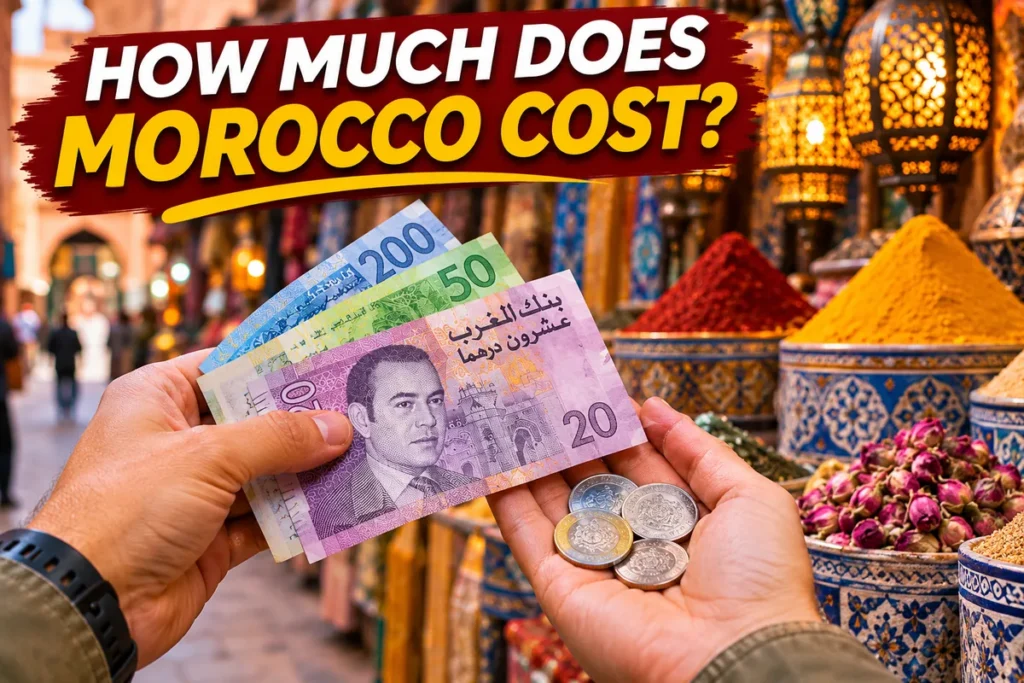
Is Morocco expensive? Compared with most of Europe or North America, no: a Morocco trip can be surprisingly affordable, and your money goes a long way in food, transport and small hotels. But prices vary a lot depending on where you stay, how you travel and which experiences you choose. This guide breaks down the real Morocco trip cost: daily budgets for backpackers, mid-range and comfort travellers, typical prices for accommodation, food, transport and activities, and practical tips to save money without missing the best experiences. Prices are indicative and change with the season, so always check before you book.
Morocco trip cost: the quick answer
- Budget traveller: roughly €35 to €55 per person per day (hostels, street food, buses).
- Mid-range traveller: roughly €80 to €150 per person per day (riads or 3 to 4-star hotels, restaurants, some tours).
- Comfort traveller: €200 or more per person per day (boutique riads, resorts, private drivers).
- Plus: flights, and any multi-day tours such as the desert.
These ranges are averages from what we see every day. Big cities like Marrakech are more expensive than smaller towns, and prices rise during holidays and peak seasons.
Is Morocco expensive or cheap?
For most visitors from Europe, the UK or North America, Morocco feels cheap for everyday things: a mint tea, a taxi ride, a tagine in a local restaurant or a bus ticket. Where it can become expensive is in tourist-focused places: boutique riads in the Marrakech medina, restaurants with a view, private tours and souvenirs bought without bargaining. The key is to mix: eat where locals eat, splurge on one or two special experiences, and book the big things in advance.
Accommodation costs
Accommodation is usually the biggest part of a Morocco budget.
- Hostels: dorm beds are often around €10 to €20 per night in the big cities, with private rooms a little more.
- Simple hotels and guesthouses: often around €30 to €60 for a double room.
- Mid-range riads and 3 to 4-star hotels: often around €60 to €130 for a double, usually with breakfast.
- Boutique riads, resorts and luxury hotels: €150 and up, sometimes much more in Marrakech.
- Desert camps: usually included in desert tours. Standard camps are basic but comfortable; luxury camps cost much more.
Money-saving tip: in Agadir and smaller towns, you get much more space for the same price than in the Marrakech medina. Our guide on where to stay in Agadir explains the best value areas.
Food and drink costs
Eating well in Morocco does not have to be expensive.
- Street food and snacks: msemen, harira, sandwiches and grilled meat often cost just a few euros.
- Local restaurants: a tagine or couscous with bread and salad is often around €5 to €10.
- Tourist restaurants and terraces: often €12 to €25 per person.
- Upscale restaurants: €30 to €60 per person or more.
- Mint tea or coffee: usually around €1 to €2 in a local café, more on touristy terraces.
- Bottled water: cheap in shops, more expensive in hotels.
- Alcohol: relatively expensive and only available in licensed places.
For a taste of local food at local prices, see what to eat in Agadir, including grilled fish at the port.
Transport costs
- Petit taxis in cities: short rides are often around €1 to €3 with the meter.
- Airport taxis: fixed fares, for example around 200 dirhams from Agadir airport to the city. See Agadir airport to the city.
- Intercity coaches: comfortable and cheap. A route like Marrakech to Agadir or Essaouira is usually a modest fare.
- Trains: good value in the north, with the high-speed train between Casablanca, Rabat and Tangier costing more.
- Car rental: small cars can be affordable, especially out of season, but add fuel, insurance and parking.
- Private driver: the most comfortable option for remote areas, and more expensive.
Tours and activities: real prices
Here are current prices for some of our most popular tours from Agadir, to give you a concrete idea. Check each tour page for what is included, such as hotel pickup.
- Paradise Valley half-day trip: from €19.
- Agadir guided city tour: from €15.
- Camel ride and mint tea: from €25.
- Sunset camel ride with BBQ dinner: from €35.
- Quad biking and sandboarding: from €40.
- Essaouira day trip: from €39.
- Marrakech day trip: from €45.
- Legzira beach and Tiznit: from €49.
- 2-day Zagora desert tour: from €250.
- 3-day Merzouga desert tour: from €350.
- Hot air balloon at sunrise: from €210.
For more ideas and prices, see our full guide to day trips from Agadir.
Entrance fees
Museums, palaces and gardens usually charge modest entrance fees. The most expensive tend to be the most famous, such as Jardin Majorelle and the nearby museum in Marrakech. Hammams range from very cheap local ones to spa experiences costing much more.
Sample budgets for a week in Morocco
Backpacker: around €300 to €400 per person (excluding flights)
- Hostel dorms or simple guesthouses.
- Street food and local restaurants.
- Buses between cities.
- A group desert tour or a couple of budget day trips.
Mid-range couple: around €1,200 to €2,000 for two (excluding flights)
- A riad in Marrakech and a hotel on the coast.
- A mix of local and nicer restaurants.
- Some taxis, a train or bus, and two or three day trips.
- A hammam, a cooking class or a sunset camel ride.
Family of four in Agadir: example
- A family room or apartment near the beach.
- Mostly local restaurants, plus one special dinner.
- Three half-day activities, such as Paradise Valley, a camel ride and a boat trip.
- One full-day trip to Essaouira or Marrakech.
Families often find Agadir excellent value, with short activities and hotel pickup included. See Agadir with kids and our 3-day Agadir itinerary.
Cost differences by city
- Marrakech: the most expensive city for tourists, especially riads inside the medina and restaurants around Jemaa el-Fna. You can still eat cheaply at the food stalls and in local restaurants.
- Fes: usually a little cheaper than Marrakech for accommodation, with excellent value riads in the old medina.
- Essaouira: mid-range, with good value seafood at the port and charming small hotels.
- Chefchaouen: affordable guesthouses, though popular places fill up fast in high season.
- Agadir: very good value for beach hotels, apartments and family activities, with lots of competition between providers.
- Desert towns: prices are mostly tied to tours and camps; standalone hotels in Merzouga or Zagora are reasonable.
Finding our local guides useful? Add YouTours as a preferred source on Google.
Cost differences by season
Prices follow demand. They are highest around Christmas and New Year, Easter, European school holidays and some long weekends, when popular riads and desert camps can sell out. Spring and autumn are popular too, but outside holidays you often find good deals. Summer is low season for inland cities because of the heat, which can mean lower prices in Marrakech, while the coast is busier with domestic tourists. Winter is high season in Agadir thanks to its mild sunshine. See the best time to visit Morocco to balance weather and budget.
Where to save and where to spend
Easy to save on: everyday meals, local transport, accommodation outside the most famous medinas, and souvenirs (if you bargain and compare). Many of the best experiences are free: walking the medinas, watching the sunset over the ocean, sitting in a square with a mint tea, or exploring a weekly market.
Worth paying for: a good guide for your first day in a big medina, a night in a desert camp, a proper hammam experience, and at least one special meal. A reliable driver for long mountain or desert roads is also money well spent: it is safer and lets you enjoy the views. These are usually the moments travellers remember most, and cutting corners on them is a false economy.
Hidden costs to plan for
- Tips: small but frequent: porters, guides, drivers, hammam attendants.
- Photos with performers in squares.
- Bread and olives placed on the table in some restaurants.
- ATM fees from your own bank.
- City tourist tax added to some hotel bills.
- Unofficial guides who expect money after “helping” you.
Our guide to money in Morocco explains tipping and payment in detail.
How to save money in Morocco
- Travel in shoulder season (spring and autumn, outside holidays) for better prices and weather.
- Stay longer in fewer places to save on transport and get better weekly rates.
- Eat where locals eat: the food is often better and much cheaper.
- Use buses and trains between cities rather than private drivers.
- Bargain in souks, but stay fair.
- Book tours directly with local operators instead of through several intermediaries.
- Choose Agafay or Zagora instead of Merzouga if you are short on time and budget.
- Base yourself on the coast and do day trips: hotels in Agadir are often better value than in Marrakech.
Is a trip to Morocco worth the money?
Absolutely. For the price of a short city break in many European capitals, you can experience medinas, mountains, desert and beaches in one trip. The secret is to spend on what matters most to you, whether that is a night under the stars in the Sahara, a beautiful riad or great food, and save on the rest.
Planning your route? See our Morocco itinerary for 7 and 10 days and the best places to visit in Morocco.
Example: what a mid-range day can look like
To make the numbers more concrete, here is what a typical mid-range day in Agadir might include for one person: breakfast at the hotel, a half-day trip to Paradise Valley (from €19), a lunch of grilled fish at the port, an afternoon at the beach, a mint tea on the promenade, a petit taxi back to the hotel, and dinner in a nice restaurant. Add a few small tips along the way. Even with a comfortable hotel, many travellers are surprised by how far their budget goes, especially compared with a beach holiday in southern Europe.
How much cash should you carry?
Even if you pay hotels and tours by card, you will need cash every day in Morocco. Taxis, small cafés, souks, tips, public toilets and snacks are almost always paid in dirhams. As a rough guide, many mid-range travellers find it comfortable to keep the equivalent of €20 to €40 per person per day in cash, topped up from ATMs every few days. Keep small notes and coins separate from your main wallet, so you never have to show a big stack of money when paying for something small.
Flights to Morocco
Flights are often the most variable cost. Marrakech, Agadir, Casablanca, Fes and Tangier all have international airports, with many direct flights from Europe, including low-cost airlines. Prices are lowest outside school holidays and when booked a few weeks in advance. Flying into one city and out of another (for example, into Marrakech and out of Agadir) often costs little more and saves a long drive back.
FAQ: cost of a trip to Morocco
How much money do I need for a week in Morocco?
Excluding flights, budget travellers can manage on around €300 to €400 per person, mid-range travellers often spend €600 to €1,000 per person, and comfort travellers more.
Is Morocco cheaper than Spain or Portugal?
Generally yes for food, local transport and simple accommodation. Upscale riads and tourist restaurants can cost as much as in Europe.
How much does a desert trip cost in Morocco?
It depends on the distance and comfort. From Agadir, our 2-day Zagora tour starts from €250 and the 3-day Merzouga tour from €350, including transport and a night in camp.
Can I use euros in Morocco?
Some places accept euros, but the rate is rarely good. It is better to pay in dirhams.
Do I need to tip in Morocco?
Tipping is customary but modest: round up taxi fares, leave around 10% in restaurants when service is not included, and give small tips to guides, drivers and porters.
Is Marrakech more expensive than Agadir?
Accommodation and tourist restaurants are generally more expensive in Marrakech, especially in the medina. Agadir often offers better value for hotels and family activities.