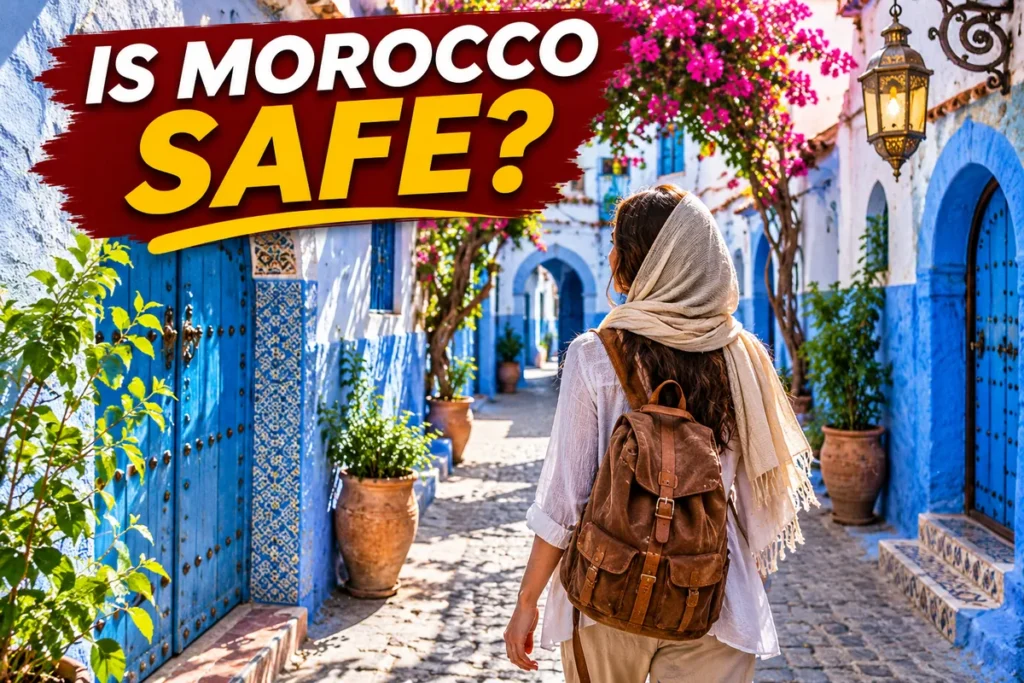
Is Morocco safe for tourists? It is one of the first questions people ask before booking, especially for a first trip, a family holiday or solo travel. The short answer is yes: millions of visitors travel to Morocco every year without any problems, and the country takes tourist safety seriously. Like anywhere, though, there are things to know: common scams, pickpocketing in crowded places, road safety and a few cultural codes. We live in Morocco and welcome travellers every day, and this guide gives you an honest, practical picture of safety in Morocco, city by city and situation by situation.
Is Morocco safe? The short answer
- Overall: Morocco is considered one of the safer destinations in North Africa and the Middle East for tourists.
- Main risks: petty theft in crowds, persistent touts and small scams, traffic, and the sun and heat.
- Violent crime against tourists: rare.
- Tourist police: present in major cities and tourist areas.
- Best advice: use the same common sense you would in any big city, and agree on prices before services.
Always check your government’s latest travel advice before you travel, as situations can change.
How safe are the main destinations?
Marrakech
Marrakech is busy, intense and very touristy. The main issues are pickpocketing in crowds, unofficial guides, aggressive selling in the souks and the scooters that speed through the narrow alleys. Serious incidents are uncommon. Keep your bag closed and in front of you in Jemaa el-Fna, ignore people who insist on showing you the way, and walk confidently. See our guide to things to do in Marrakech for tips on enjoying the city.
Fes
The Fes medina is one of the largest in the world, and getting lost is the main “danger”. Unofficial guides can be persistent. Hiring an official guide for your first day makes everything easier.
Agadir
Agadir is one of the calmest and most relaxed cities in Morocco, built around a long beach and modern avenues. It is very popular with families and older travellers. The main things to watch are the Atlantic currents when swimming and the usual care with valuables on the beach. Read our detailed guide Is Agadir safe?
Essaouira, Chefchaouen and smaller towns
These are generally very relaxed, with less hassle than the big cities. Chefchaouen is small and walkable, Essaouira laid-back and friendly.
The desert and the mountains
Desert and mountain areas are safe with a reputable tour operator or guide. The main risks are natural: heat, cold nights, dehydration, and winding roads. Never venture into the desert alone or without proper preparation.
Common scams and how to avoid them
Most “problems” tourists face in Morocco are not dangerous, just annoying. Knowing them in advance takes the stress away.
- “The road is closed”: someone tells you the street ahead is closed and offers to show you another way, usually to a shop or for a fee. Check your map and continue.
- Unofficial guides: friendly people who “help” you and then ask for money. Say “la, choukran” (no, thank you) politely and keep walking.
- Tanneries and “special” markets: you are led to a terrace or shop, then asked for a large tip. Agree on any fee first, or go with an official guide.
- Henna ambush: a henna artist starts drawing on your hand without asking, then demands payment. Pull your hand back firmly.
- Taxi fares: drivers who “forget” the meter. Ask for “le compteur” or agree on the price before you get in.
- Restaurant extras: bread, olives or water appearing on your bill. Ask what is included when you order.
- Photos: performers, monkeys or snakes put on you for a photo, followed by a demand for money. Decline before it happens if you do not want it.
Our article with Morocco travel tips for first-timers covers these and many more practical tips.
Staying safe in the medina: a practical routine
The old medinas of Marrakech, Fes and other cities are the heart of a Morocco trip, and also where most visitors feel overwhelmed at first. A simple routine makes them much easier:
- Download an offline map before you go out, and mark your riad on it. Many riads are hidden in small alleys with no sign.
- Ask your riad for a meeting point, like a café or a square, where staff can come and find you if you get lost.
- Carry the riad’s business card or a photo of its address. Any shopkeeper can point you back.
- Explore in daylight first. Do your first walk in the morning, when the alleys are calmer and shops are opening.
- Keep to the side of the alleys and listen for “balak” (watch out), which means a cart, donkey or scooter is coming.
- If you are lost, ask a shopkeeper or a family rather than young men who approach you, and expect to give a small tip if someone walks you all the way.
- Take breaks. A rooftop café or a quiet garden gives you time to reset before going back into the crowds.
After a day or two, most travellers find their rhythm and start to enjoy the energy instead of being stressed by it.
Common myths about safety in Morocco
“You cannot go anywhere without a guide.” False. You can explore most cities on your own. A guide is helpful in large medinas and for remote areas, but not required.
“Women have to cover their hair.” False. Tourists do not need to cover their hair. Modest clothing is recommended, but a headscarf is only needed in the few mosques open to visitors.
“All Moroccans want your money.” False. Touts are visible in tourist hotspots, but the vast majority of Moroccans are simply going about their lives, and many will help you with no expectation at all.
“The desert is dangerous.” Not with a proper tour. The desert is a peaceful place; the risks are heat and cold, which are easy to manage with the right preparation.
Is Morocco safe for women travelling alone?
Many women travel solo in Morocco and have a wonderful time. It is honest to say, however, that some women experience unwanted attention, such as comments or persistent conversation, mostly in the big medinas. Things that help:
- Dress in loose clothes that cover shoulders and knees in towns. It reduces attention considerably.
- Walk with purpose and avoid long conversations with persistent men. A firm “no, thank you” is enough.
- Choose well-reviewed riads and hotels, and ask your host for advice on the area.
- Join group activities or guided tours, which are also a great way to meet other travellers.
- Start your trip somewhere calm, like Agadir or Essaouira, to get used to the rhythm.
- Avoid walking alone in empty areas late at night, as you would anywhere.
See our guide on what to wear in Morocco for practical clothing advice.
Is Morocco safe for families?
Yes. Moroccans are very welcoming to children, and families are a common sight in hotels, beaches and restaurants. The main points to watch are road traffic, the sun and heat, the sea, and food hygiene. The coast, and especially Agadir, is ideal for families thanks to the long beach, the calm city and short activities with hotel pickup. Read Agadir with kids for ideas.
Is Morocco safe for LGBTQ+ travellers?
Same-sex relationships are illegal in Morocco, and public displays of affection are frowned upon in general, for all couples. Many LGBTQ+ travellers visit Morocco without problems by being discreet in public. Check your government’s travel advice for the latest information.
Road safety
Road traffic is one of the main real risks in Morocco. City traffic can be chaotic, and mountain roads like the Tizi n’Tichka pass are winding, with trucks and changing weather. If you drive, avoid driving at night outside cities and watch out for pedestrians, animals and motorbikes. For long desert and mountain routes, a professional driver or organised tour is the safest option.
Our desert tours from Agadir, such as the 2-day Zagora desert tour (from €250) or the 3-day Merzouga desert tour (from €350), include an experienced driver who knows these roads well.
Finding our local guides useful? Add YouTours as a preferred source on Google.
Health and natural risks
- Sun and heat: drink plenty of water, wear a hat and avoid the midday sun in summer, especially inland and in the desert.
- Cold: desert and mountain nights can be cold in winter. Pack layers.
- Stomach problems: many travellers prefer bottled water and choose busy places to eat.
- Swimming: the Atlantic can have strong currents. Swim in supervised areas and follow the flags. See the best beaches in Agadir.
- Animals: avoid touching street cats and dogs, and keep a distance from monkeys at places like Ouzoud.
Safety tips for activities
Activities like quad biking, buggy rides, camel rides, surfing and boat trips are very popular in Morocco. Choose operators who provide helmets, safety briefings and insurance, and do not hesitate to ask about them before booking. With YouTours, activities like quad biking in Agadir (from €40) or a camel ride (from €25) are run with local guides who know the terrain, and you can ask us about the safety equipment before you book. Read our quad biking guide to know what to expect.
Money and valuables
- Use ATMs inside banks or shopping centres when possible.
- Carry only the cash you need for the day, in small notes.
- Keep your phone in a closed bag or front pocket in crowds.
- Use the hotel safe for passports and extra cash.
- Do not leave valuables unattended on the beach.
More in our guide to money in Morocco.
Respecting local culture keeps you safe too
A lot of safety comes from respect and understanding. Dressing appropriately, asking before taking photos, being discreet with alcohol and affection, and respecting prayer times and Ramadan all help you blend in and avoid tension. Moroccans are generally very hospitable, and a few words of Arabic or French, a smile and patience go a long way.
Emergency numbers in Morocco
- Police: 19 (in cities)
- Gendarmerie (rural areas): 177
- Ambulance and fire: 15
Save your embassy’s contact details and your hotel’s phone number before you travel, and keep a copy of your passport on your phone.
How YouTours keeps your trip safe
As a local company in Agadir, we work with drivers and guides who know their region and the roads, and we stay reachable by WhatsApp before and during your trip. If you have questions about safety before booking, contact us and we will give you an honest answer.
Safety in Morocco by season
The season changes the type of risk more than the level of risk. In summer, heat is the main danger inland and in the desert, where temperatures can be extreme: travel early in the morning, rest at midday and drink constantly. In winter, mountain passes can be affected by snow and ice, and desert nights can drop close to freezing, so check road conditions and pack warm layers. On the Atlantic coast, waves and currents are generally stronger in winter, which matters for swimmers and beginner surfers. Spring and autumn are the most comfortable and the easiest seasons for a first trip. See the best time to visit Morocco for details.
Our honest verdict
Morocco is a safe and rewarding destination for the vast majority of travellers. The challenges are mostly about hassle, not danger, and they become easy to handle once you know what to expect. Start somewhere relaxed, use reputable guides and drivers, agree on prices in advance, and you will be free to enjoy the incredible hospitality, landscapes and culture. Ready to plan? Read our Morocco itinerary for 7 and 10 days.
FAQ: is Morocco safe?
Is Morocco safe for tourists right now?
Morocco is generally safe for tourists, and millions visit every year. Check your government’s official travel advice before you go for the latest information.
What is the safest city in Morocco for tourists?
Agadir, Essaouira and Chefchaouen are among the most relaxed. Marrakech and Fes are safe too, but busier, with more hassle.
Is Marrakech dangerous at night?
The main streets and Jemaa el-Fna are lively and busy in the evening. As anywhere, avoid empty alleys late at night and keep an eye on your belongings.
Can I travel solo in Morocco?
Yes. Many solo travellers visit Morocco. Choose well-reviewed accommodation, dress modestly and consider guided tours for remote areas.
Is it safe to do a desert tour in Morocco?
Yes, with a reputable operator. Choose a company with experienced drivers and good reviews, and pack for both heat and cold.